What Kinds of Basement Lighting Do We Install?
A basement is really four or five rooms sharing one ceiling, so the right fixture depends on the zone. Here’s how we usually break it down.
Rec room and family area
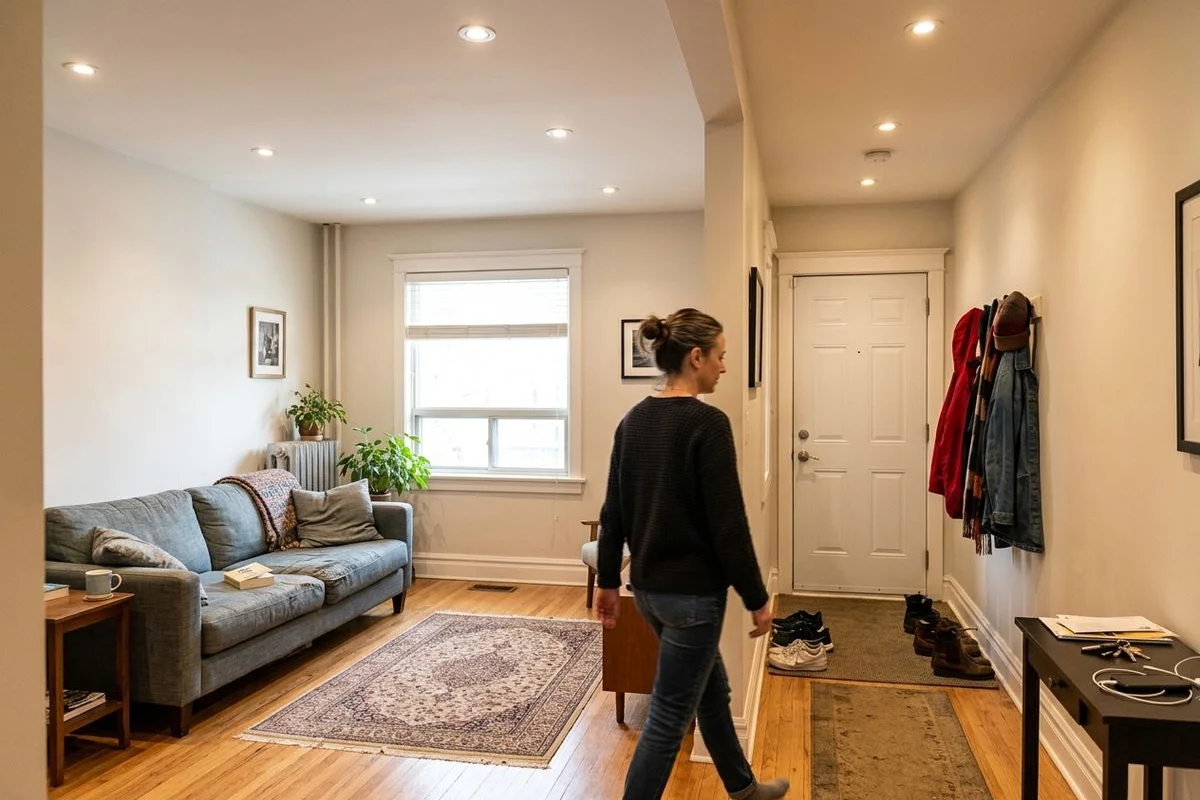
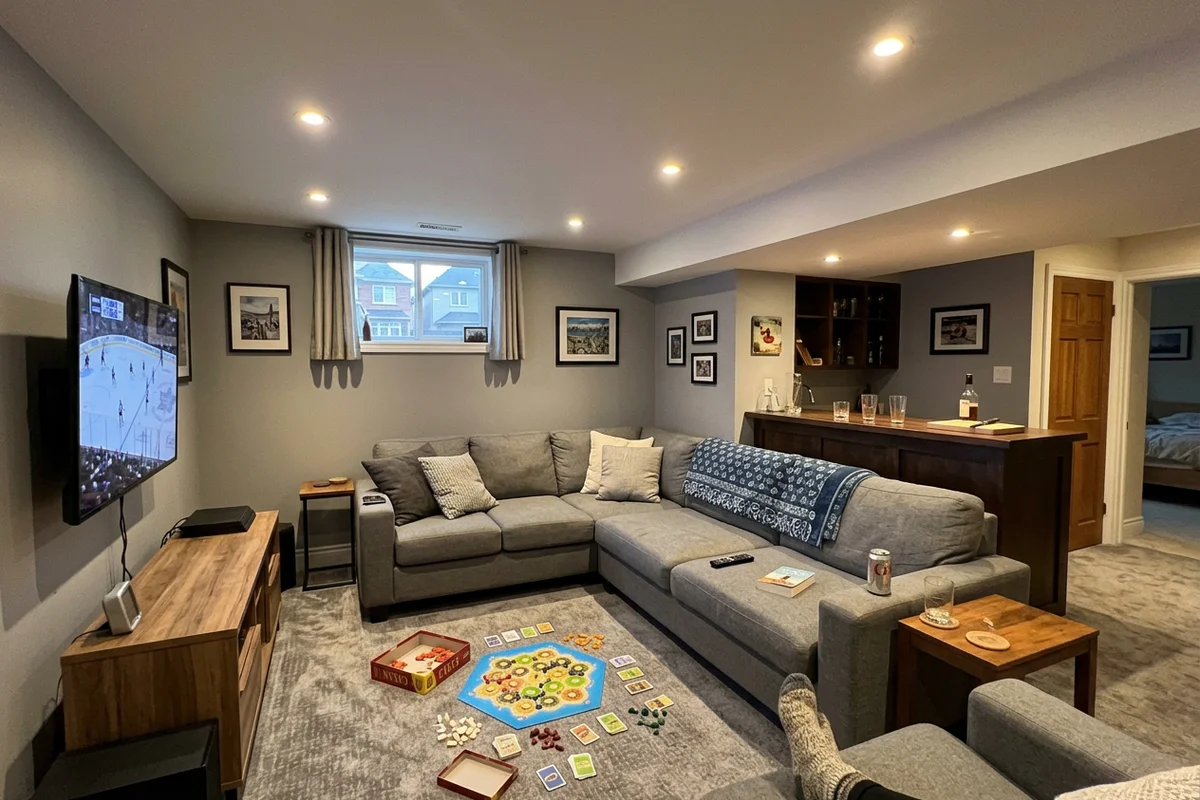
This is the biggest zone and usually gets 10 to 14 potlights in a grid on one or two dimmers. We use 4-inch canless wafers in 3000K so the room feels warm on a dark February evening without looking dim.
Home office nook
Three or four fixtures over the desk, on their own switch, at 3500K. It keeps screens glare-free and gives you proper light for paperwork.
Laundry and utility corner
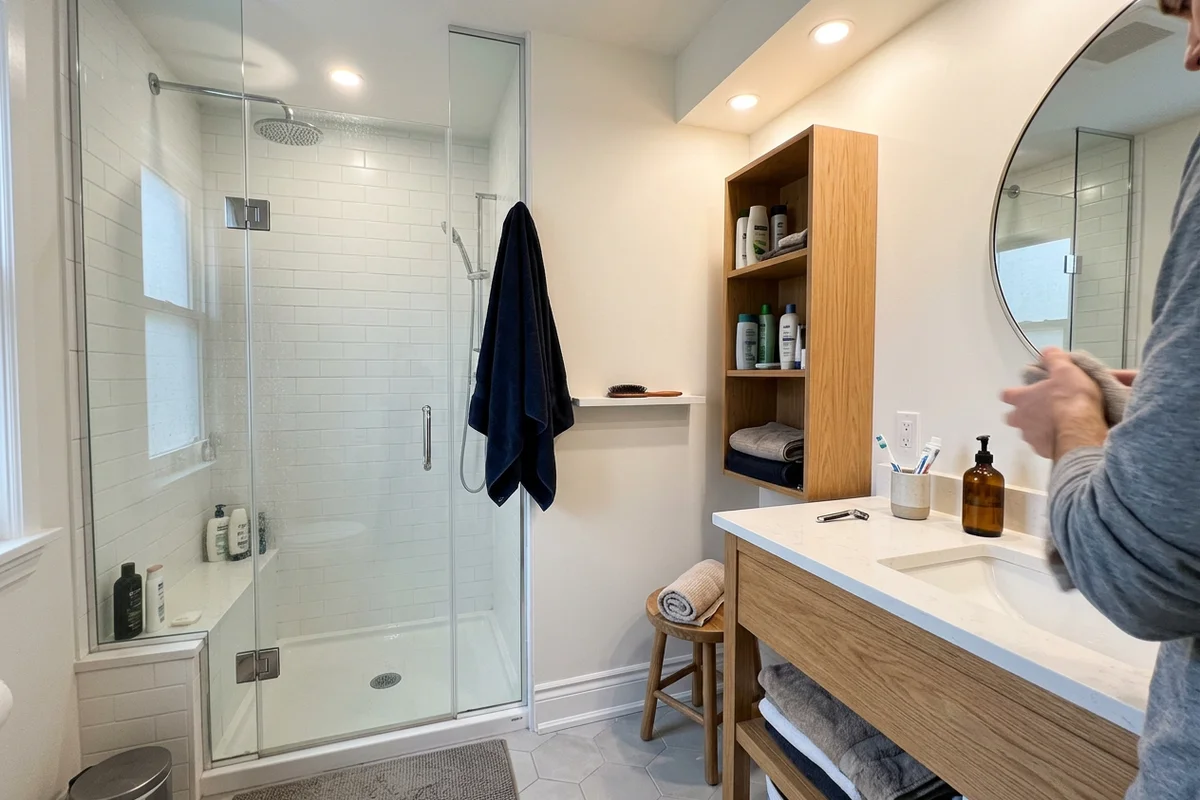
Damp-location listed fixtures near the laundry sink. They’re sealed, so summer humidity won’t fog the lens or corrode the trim.
Home theatre and bar
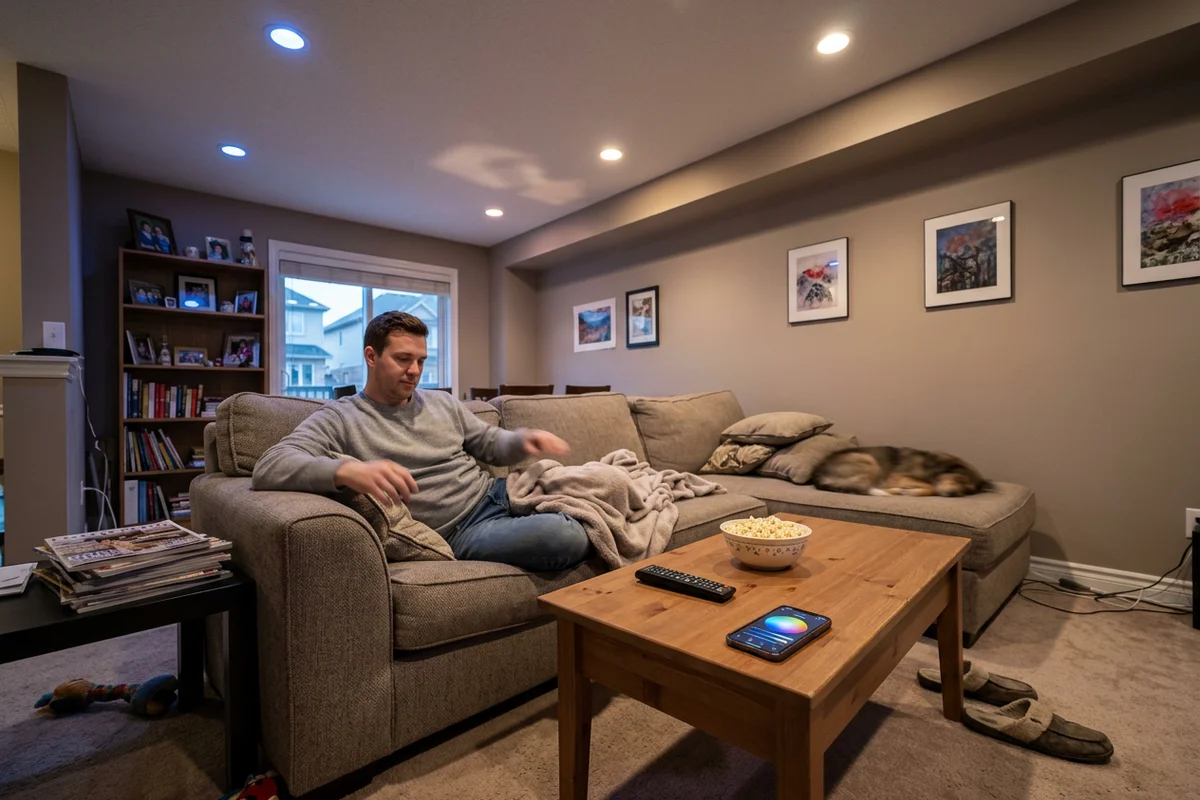
Low-glare baffle trims on a separate dimmer, often at 2700K. Some clients add a Lutron Caseta dimmer so they can drop the lights from their phone when the movie starts.
Stairwells and hallways
A 3-way switch at the top and bottom of the stairs, with one or two potlights lighting each tread. It’s a small detail that makes a big safety difference.
How Much Does Basement Potlight Installation Cost in Toronto?
Most basements land between $1,400 and $2,000 for a full 25-light job. Our published 20 to 30 light package starts at $1,800. Here’s what changes the price.
| Cost factor | Lower end | Higher end |
|---|---|---|
| Ceiling status | Open joists, no drywall | Finished drywall, fished runs |
| Light count | About 20 lights | About 30 lights |
| Zones | Two dimmers | Four or more dimmers |
| Old fixtures | Nothing to remove | Fluorescent troffers to remove and patch |
| Circuits | Existing circuit capacity | New basement circuit needed |
Drop ceilings sit in the middle. Access is easy, but tiles need to be cut cleanly and old troffers need removal. Everything’s spelled out on your written quote before we start.
When Should You Plan Basement Lighting?
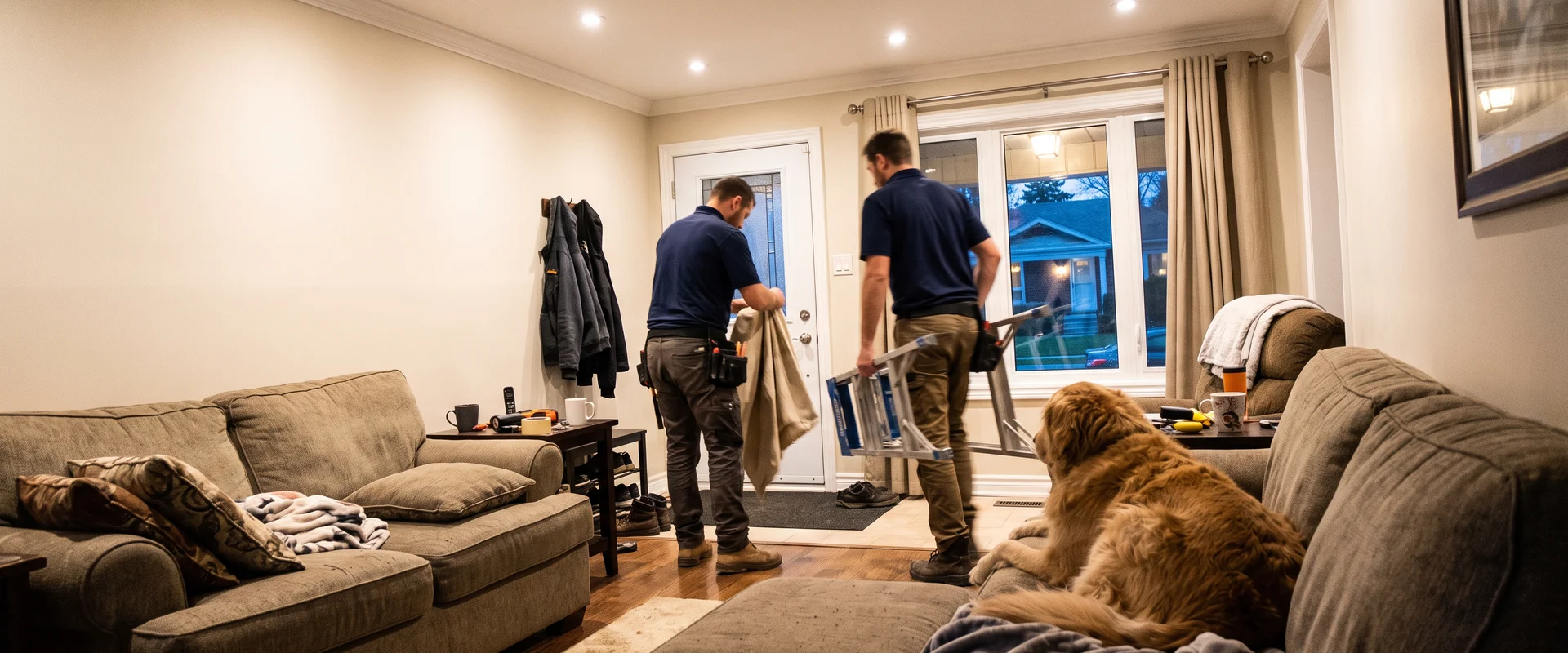
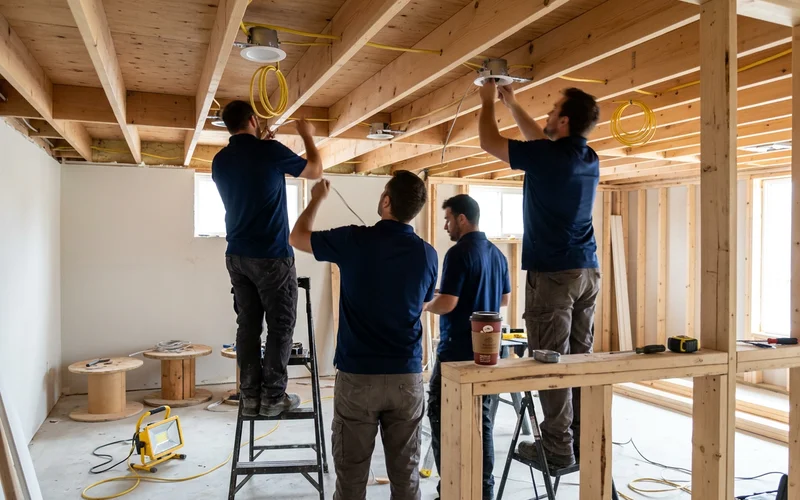
The best time is right after framing and before drywall, because we can wire the entire floor in about a day. Plenty of Toronto homeowners do their basement over the winter, so January through March fills up fast for us. If your basement’s already finished, we’ll fish wire through the existing ceiling and patch the access holes, which is still a one to two day job.
Another common trigger is a flickering fluorescent tube that finally gives out. In older Scarborough and Etobicoke bungalows, those fixtures are often 40 years old and the ballasts are failing. Swapping them for LED potlights cuts power use and gets rid of the hum.
Common Basement Lighting Problems We Fix
One switch for the whole floor
Everything turns on at once, which wastes power and ruins movie night. We split the floor into zones with separate dimmers.
Dark corners and cave-like rooms
Too few lights, spaced too far apart. Basement ceilings are low, so beams don’t spread far. We tighten the spacing and use wider beam angles.
Buzzing fluorescent tubes
Old magnetic ballasts hum and flicker. We remove them, recycle the tubes and replace them with LED potlights on a proper dimmer.
Lights that won’t fit under ducts
Traditional housings need 6 inches of depth. Canless wafers need about half an inch, so they sit neatly under ductwork and beams.
Basement Potlights vs. Other Options
Flush-mount fixtures are cheaper upfront but take up headroom in a basement that’s already short, and they leave shadows between them. LED strip lights look modern but don’t light the room evenly. Potlights sit flush with the ceiling, keep every inch of headroom and give you even light across the whole floor. For a space you’ll use for the next 15 or 20 years, that’s usually the better call.
Finishing your basement this winter? Book a free consultation and we’ll time the wiring around your drywall crew.